Rising above the Istanbul skyline with its cascading domes and soaring minarets, Hagia Sophia has witnessed the rise and fall of empires, the clash of civilizations, and the quiet devotion of millions. Few buildings on Earth carry so many layers of history within a single set of walls.
The site of Hagia Sophia has been sacred ground since at least the 4th century AD. The first church on this location was commissioned by Emperor Constantine I, founder of Constantinople, and completed around 360 AD under his son Constantius II. Known as the Megale Ekklesia, or Great Church, it was a timber-roofed basilica that served as the spiritual heart of the Eastern Roman Empire. This original structure was burned to the ground during the Nika Revolt of 404 AD, and a second church built in its place met a similar fate during another catastrophic riot in January 532 AD, reducing it once again to ash and rubble.
Within weeks of the second church's destruction, Emperor Justinian I made one of the most audacious architectural decisions in history. He commissioned an entirely new building of unprecedented scale and ambition, appointing the mathematician Isidore of Miletus and the physicist Anthemius of Tralles as his master architects — scholars rather than traditional builders. Construction began in February 532 AD and was completed in a remarkable five years, with the cathedral consecrated on December 27, 537 AD. Justinian reportedly walked beneath the soaring dome on the day of dedication and declared, 'Solomon, I have surpassed thee,' acknowledging the building's triumph over the legendary Temple in Jerusalem.
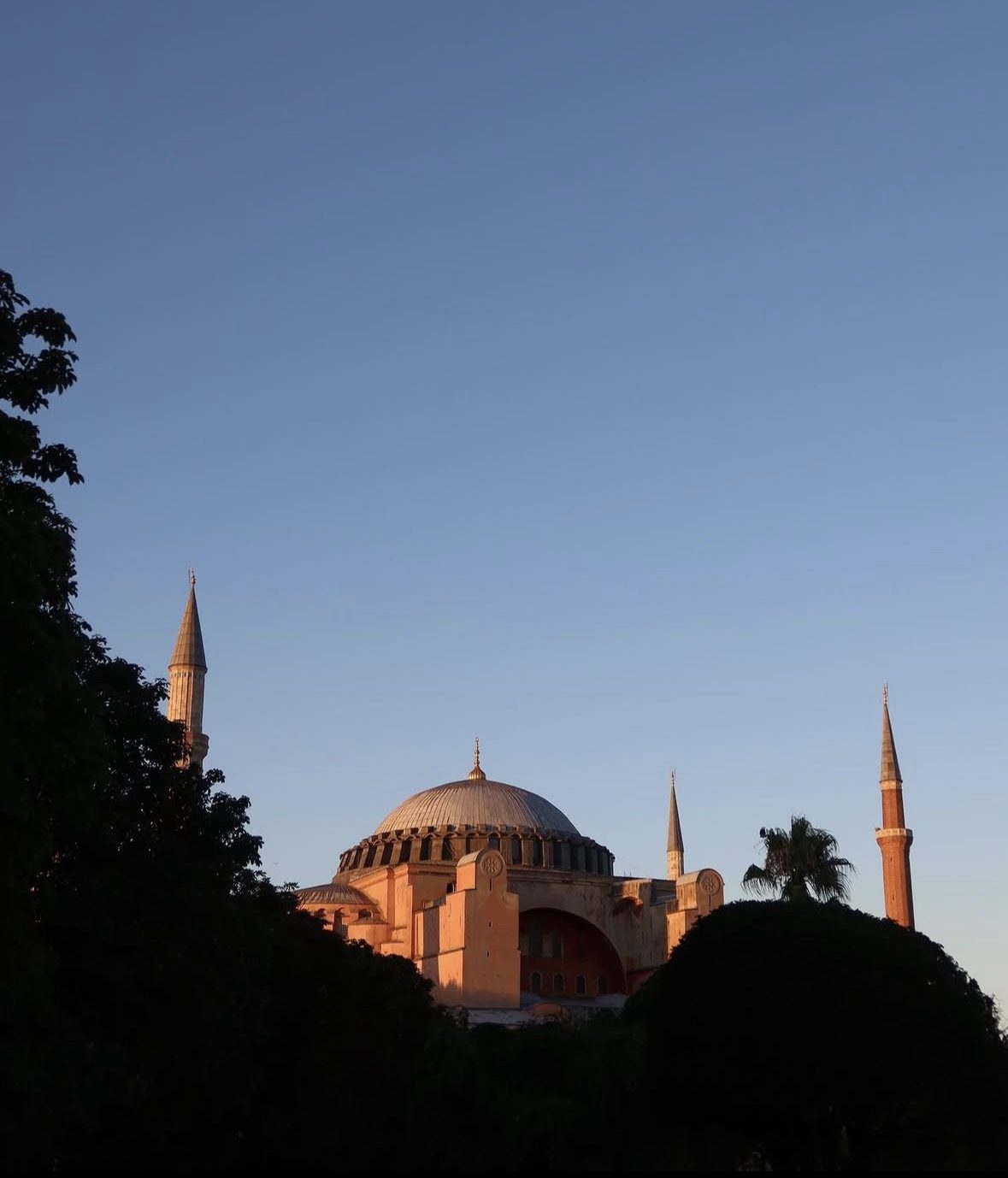
The engineering genius of Hagia Sophia is difficult to overstate. Its central dome measures approximately 31 metres in diameter and soars 55.6 metres above the floor — roughly the height of a 15-storey building. Justinian's architects solved the problem of placing a round dome over a rectangular space by inventing the pendentive, a curved triangular section that transitions seamlessly between the two shapes. The dome is ringed by 40 windows that flood the interior with light, creating the illusion, described by the court historian Procopius, that the dome was 'suspended from heaven by a golden chain.' The effect remains breathtaking nearly fifteen centuries later.
For nearly a thousand years, Hagia Sophia functioned as the patriarchal cathedral of Constantinople, accumulating extraordinary Byzantine mosaics, marble columns sourced from across the empire, and golden decorations of staggering wealth. It was here that emperors were crowned and excommunications were proclaimed. The Great Schism of 1054, which formally split Christianity into Roman Catholic and Eastern Orthodox branches, was dramatically underscored when a papal legate placed a bull of excommunication on the altar of Hagia Sophia. The building suffered looting during the Fourth Crusade of 1204, when Latin Christian forces stripped its treasures and briefly converted it to a Catholic cathedral.
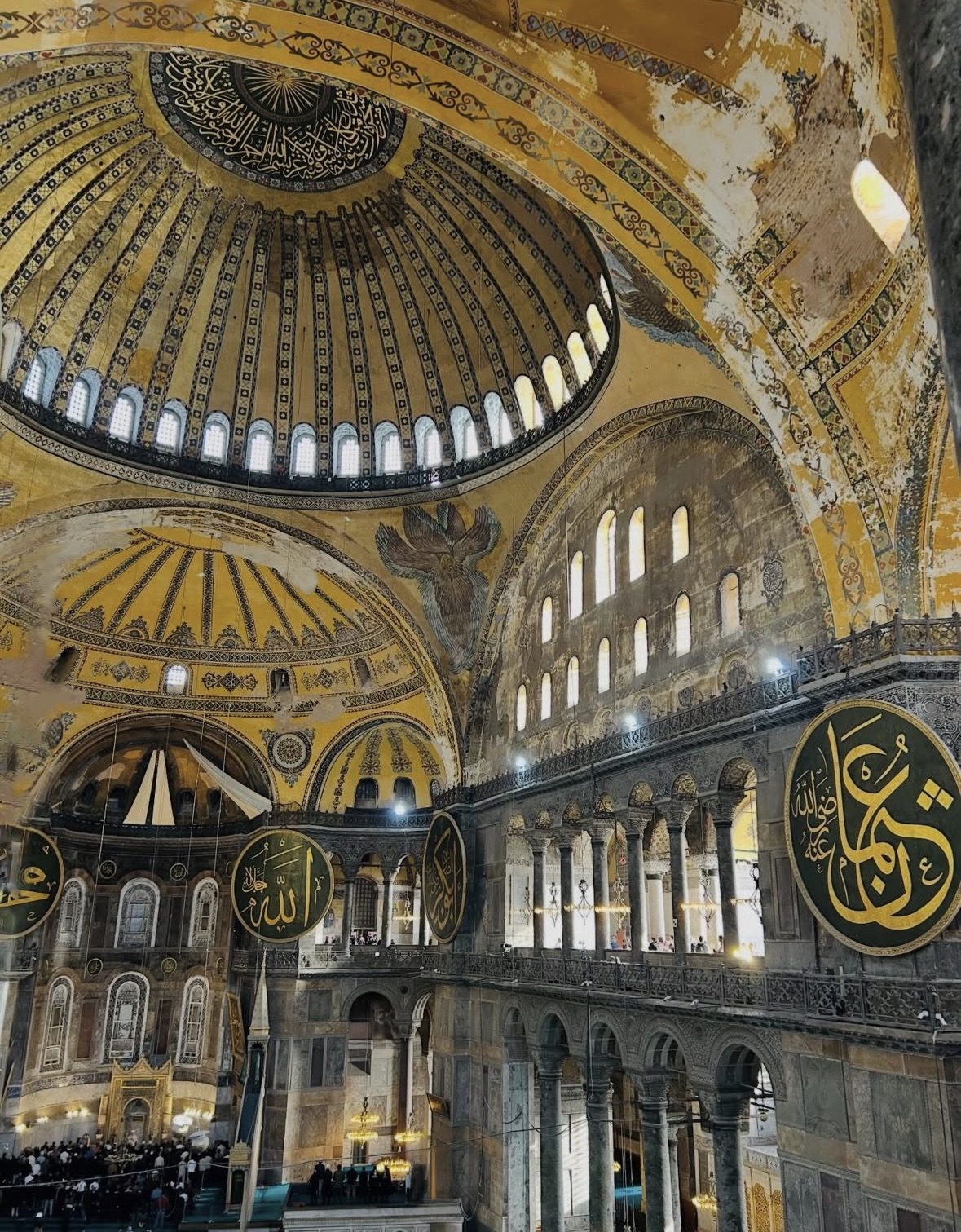
On May 29, 1453, Ottoman Sultan Mehmed II rode into Constantinople after a 53-day siege, walked directly to Hagia Sophia, and ordered it converted into a mosque. Islamic law prohibited the destruction of the existing structure, so Mehmed preserved the building while transforming its purpose. The Christian mosaics were plastered over, a mihrab indicating the direction of Mecca was installed, and four minarets were gradually added over subsequent decades. Massive calligraphic medallions bearing the names of Allah, the Prophet Muhammad, and the first four caliphs were hung in the nave. For the next 481 years, Hagia Sophia served as Istanbul's imperial Friday mosque.
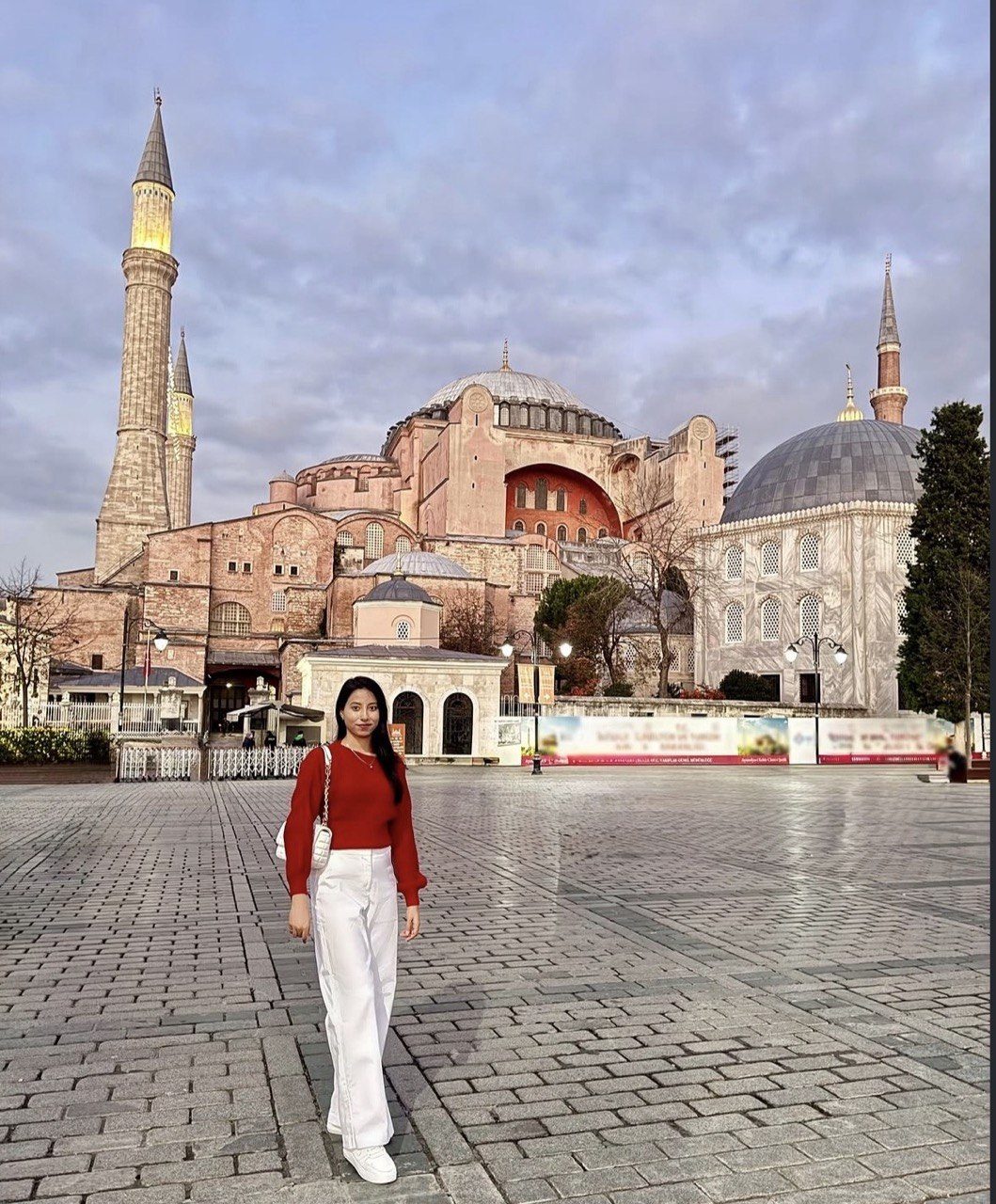
Following the fall of the Ottoman Empire and the establishment of the Turkish Republic, Mustafa Kemal Atatürk sought to reframe Turkey as a secular, modern nation. In November 1934, he signed a decree converting Hagia Sophia from a mosque into a museum, a gesture intended to signal Turkey's break from its Ottoman-Islamic past and its openness to all humanity. The museum opened to the public on February 1, 1935, and admission was made free of charge. This decision was widely praised internationally as an act of cultural diplomacy, placing one of the world's greatest architectural achievements beyond the claims of any single religion or state.
In 1985, Hagia Sophia was inscribed as a UNESCO World Heritage Site as part of the Historic Areas of Istanbul, recognising its outstanding universal value to humanity. As a museum, the building underwent intensive conservation work, with scholars carefully uncovering and restoring Byzantine mosaics that had been hidden under Ottoman plaster for centuries. The magnificent 9th-century mosaic of the Virgin and Child in the apse, the Deësis mosaic in the upper gallery, and the imperial portraits of Emperors Constantine IX and Zoe were painstakingly brought back to visibility, making Hagia Sophia one of the richest repositories of middle Byzantine art anywhere in the world.
On July 10, 2020, Turkey's Council of State annulled the 1934 cabinet decree that had established Hagia Sophia as a museum, and President Recep Tayyip Erdoğan signed an order transferring its management to the Directorate of Religious Affairs. The first Friday prayers were held on July 24, 2020, broadcast live on national television and watched by millions. The reconversion prompted significant international debate, with UNESCO and numerous governments expressing concern about access and the preservation of its Christian heritage. Turkish authorities responded that the site would remain open to all visitors free of charge outside prayer times, and that Christian mosaics would be covered with curtains or lighting adjustments during worship.
Visiting Hagia Sophia in its current form as an active mosque is a layered, moving experience unlike almost anywhere else on Earth. Outside prayer times, non-Muslim visitors are warmly welcomed and may explore the vast interior free of charge, though modest dress and the removal of shoes are required. The interplay of Byzantine gold mosaics and Ottoman calligraphy creates a visual dialogue across fifteen centuries. The famous Deësis mosaic, considered among the finest examples of Byzantine art in existence, glows in the upper gallery. The marble floors, worn smooth by countless millions of footsteps, connect every visitor physically to the long continuum of human devotion this building represents.
Whether you stand beneath the dome at dawn as the call to prayer echoes across Istanbul's rooftops, or linger in the upper gallery studying the faces of long-dead emperors rendered in shimmering gold tesserae, Hagia Sophia rewards curiosity, patience, and reverence in equal measure. Pairing your visit with a guided expert tour unlocks stories hidden in every column, mosaic, and calligraphic inscription that a solo wander simply cannot provide. This is one of those rare places that genuinely changes how you see human history — and the world looks a little different when you step back out into the Istanbul sunlight.
Ready to Experience It Yourself?
A guided tour of Hagia Sophia transforms a sightseeing tick into a genuine encounter with one of civilisation's greatest monuments. Expert local guides bring the Byzantine emperors, Ottoman sultans, and master architects vividly to life as you stand in the very spaces where history was made. Browse our hand-picked tours below and secure your place inside Istanbul's most extraordinary building.
Book Your Tour Now